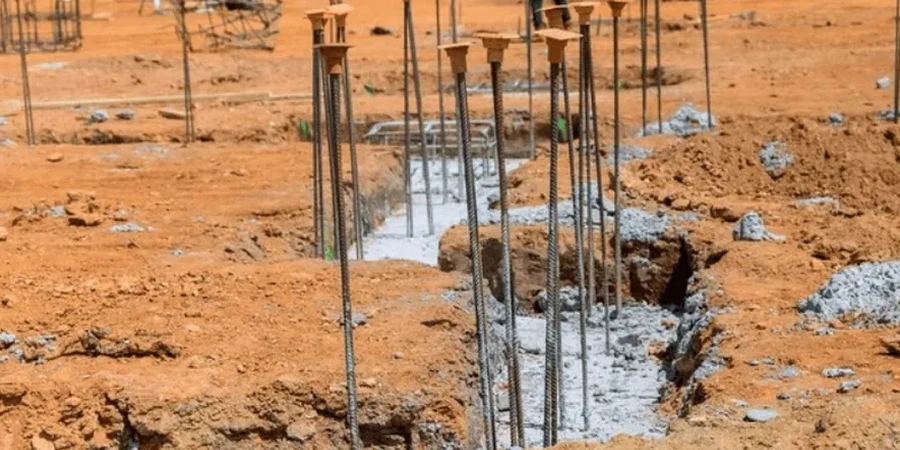
The International Building Code (IBC 2021) and ASCE 7-22 impose specific deep foundation requirements along the Texas Gulf Coast, and Corpus Christi’s subsurface conditions turn those code provisions into daily engineering reality. The city sits on a stratigraphy of Holocene bay clays, interbedded loose sands, and active groundwater within 1.5 meters of the surface — a combination that makes shallow footings unreliable for any structure exceeding two stories. Pile foundation design here must account for storm surge scour, expansive clay heave during drought summers, and lateral loads from hurricane winds exceeding 150 mph. When the Texas Department of Insurance reviews a commercial project near South Padre Island Drive or a port warehouse along the Inner Harbor, they expect a sealed pile design report backed by site-specific SPT drilling data and laboratory classification of the extracted samples. The local geology does not forgive shortcuts.
Pile design on Gulf Coast clays is not about finding rock — it is about quantifying the exact depth where skin friction and end bearing together beat settlement limits under hurricane wind and storm surge.
Local considerations
The most frequent problem we encounter when reviewing Corpus Christi projects is a pile design that treats the entire soil column as drained — an assumption that collapses the moment a hurricane storm surge saturates the upper clay and eliminates negative pore pressure. An undrained analysis using the total stress alpha method for the soft upper layer produces a much shorter pile than a drained effective stress calculation, and the difference can exceed 4 meters of embedment. Contractors who accept the cheaper, shorter pile configuration without verifying the undrained case end up with structures that tilt visibly within two wet seasons. A second error is neglecting the downdrag load from settling fill: many commercial pads along SPID were built on 2 to 3 meters of compacted fill placed over compressible clay, and that fill will consolidate for years, dragging down any pile that does not extend deep enough to bypass the settling zone completely. Both failure modes are entirely preventable with a site-specific pile foundation design that runs both drained and undrained scenarios, incorporates the fill history, and applies the scour depth prescribed in the FEMA Flood Insurance Study for Nueces County.
Frequently asked questions
What depth do piles typically need to reach in Corpus Christi to bypass the soft clay?
In the downtown and North Beach areas, the soft Holocene clay extends 5 to 7 meters deep, and piles must reach the underlying Beaumont Formation stiff clay or Pleistocene sand between 14 and 22 meters to develop reliable side friction and end bearing. Sites near Oso Creek can show thicker compressible layers requiring 25-meter embedment. Every design relies on SPT and CPT data to pinpoint the competent stratum.
How does hurricane storm surge affect pile foundation design?
Storm surge introduces three load cases: lateral wave forces on the pile cap, temporary buoyancy reducing effective stress in the upper soil, and scour that removes several feet of confining soil. We model each case per ASCE 7-22 Chapter 5 flood provisions and the effective FEMA Flood Insurance Study for Nueces County, ensuring the pile length and reinforcement account for the reduced lateral support during a 100-year event.
What is the cost range for a pile foundation design report in Corpus Christi?
For a typical commercial building or port structure in Corpus Christi, the pile foundation design package — including subsurface exploration program planning, capacity analysis, lateral response modeling, and a sealed engineering report — ranges from US$1,730 to US$5,710 depending on the number of pile types evaluated and whether load test interpretation is included.