← Home · Investigation

CPT Testing in Corpus Christi: Reliable Cone Penetration Data for Gulf Coast Projects

Together, we solve the challenges of tomorrow.

LEARN MORE →

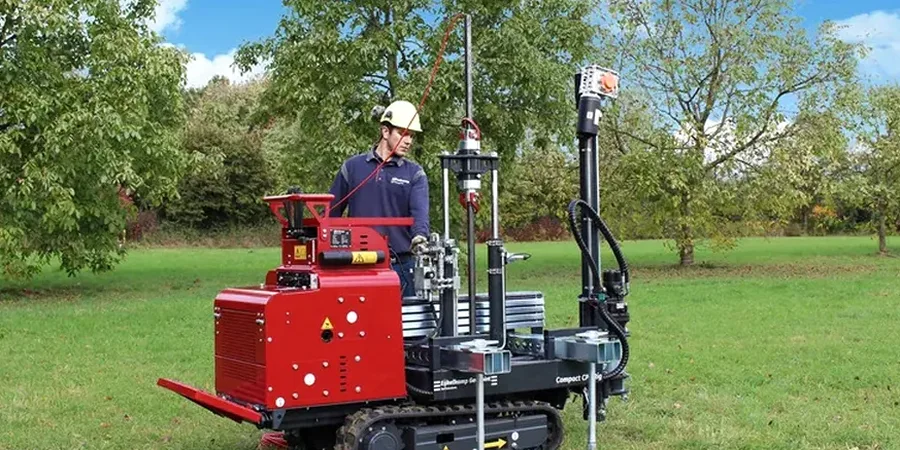
ASTM D5778 governs cone penetration testing across the U.S., but applying it in Corpus Christi means dealing with a unique subsurface profile. The city sits on Quaternary alluvium and Beaumont Formation clays that dominate the Coastal Bend. These soft, compressible soils extend deep beneath the 27.7°N latitude, where bay and fluvial deposits create highly variable stratigraphy. A standard SPT hammer just won’t give you the continuous resolution needed here. Our CPT rigs push a 15 cm² cone at 2 cm/sec, recording tip resistance, sleeve friction, and pore pressure simultaneously. For refinery expansions near the Ship Channel or windstorm-rated structures under IBC 2021, you need soil behavior type classification without gaps. That’s what we deliver in Corpus Christi—no guesswork, just a clean log every 2 centimeters.

Two centimeters of vertical resolution reveals what a split spoon sampler misses. In Corpus Christi’s layered bay deposits, that’s the difference between a safe foundation and a future claim.
Methodology and scope

A recent job on Leopard Street involved a six-story medical office building where the geotech report flagged potential liquefiable layers. We mobilized a 25-ton CPT truck and pushed to 80 feet through interbedded silts and clays. The friction ratio data showed a thin loose sand lens at 45 feet that the original boring logs had missed. Using the normalized soil behavior type chart from Robertson, we confirmed it was contractive sand below the water table. The structural engineer immediately revised the foundation design. In Corpus Christi, where the water table sits high and hurricane storm surge is a real threat, this kind of detail matters. We often pair CPT soundings with masw to get shear wave velocity profiles for site class determination per ASCE 7-22 Chapter 20.
CPT Testing in Corpus Christi: Reliable Cone Penetration Data for Gulf Coast Projects
Technical reference image — Corpus Christi

Local geotechnical context

Corpus Christi recorded a population of 316,000 in 2022 and sits at an average elevation of just 7 feet above sea level. That low relief combined with hurricane exposure makes foundation performance a public safety issue. Soft clay layers can lose strength under cyclic loading from storm waves or seismic events—the 2023 M5.4 earthquake near Alice, 40 miles west, was a wake-up call for many engineers. Skipping pore pressure dissipation tests in these saturated deposits leaves you blind to consolidation settlement rates. We’ve seen projects where undrained shear strength from CPT correlations was half the value assumed in preliminary design. When a building permit reviewer asks for site-specific liquefaction analysis, you don’t want to explain why you only ran SPT borings in a city where the groundwater is at 5 feet depth.

Need a geotechnical assessment?

Reply within 24h.

Email: contact@geotechnical-engineering1.org

Technical data

ParameterTypical value
Cone tip resistance (qc)0.5 to 50+ MPa typical for Coastal Bend soils
Sleeve friction (fs)2 to 500 kPa depending on clay content
Pore water pressure (u2)Measured at shoulder position, filter element saturated with glycerin
Friction ratio (Rf)0.1% in clean sands, 3-8% in Beaumont clays
Normalized soil behavior type (SBTn)Robertson (2016) chart, zones 1 through 7
Standard push rate20 mm/s ± 5 mm/s per ASTM D5778
Maximum depth capacity100 ft with 25-ton reaction; deeper with anchored setup

Related services

01

Piezocone penetration with pore pressure

Standard CPTu using a 15 cm² cone with u2 filter element. We record qc, fs, and u2 continuously. Ideal for detecting thin drainage layers in Beaumont Formation clays.

02

Pore pressure dissipation testing

We stop penetration at clay layers and monitor u2 decay over time. This gives you coefficient of consolidation (cv) directly, critical for settlement rate predictions in compressible Gulf Coast soils.

03

Seismic CPT (SCPT)

A downhole geophone pair records shear wave arrivals every 1 meter. We deliver Vs profiles for ASCE 7 site class determination, essential for hospitals and schools in windstorm zones.

04

CPT for liquefaction assessment

We apply the Boulanger & Idriss (2014) CPT-based triggering method. Thin-layer correction and fines content from Ic give you a defensible factor of safety for building permit submittals.

Regulatory framework

ASTM D5778-20: Standard Test Method for Electronic Friction Cone and Piezocone Penetration Testing of Soils, ASCE 7-22 Chapter 20: Site Classification Procedure for Seismic Design, IBC 2021 Section 1803: Geotechnical Investigations, Robertson & Cabal (2015) Guide to Cone Penetration Testing for Geotechnical Engineering, TxDOT Geotechnical Manual (2023): CPT requirements for bridge foundations

Questions and answers

How deep can you push a CPT in Corpus Christi’s soils?

With our 25-ton reaction truck, we typically reach 80 to 100 feet in the clays and silts common around Corpus Christi. Refusal occurs on dense Pleistocene sand stringers or cemented caliche layers. If we hit refusal early, we pre-drill through the hard layer and resume pushing.

What does a CPT test cost in the Corpus Christi area?
Do you provide interpreted soil behavior type logs?

Yes. Every CPT report includes a soil behavior type log using the normalized Robertson (2016) chart. We also provide interpreted parameters: undrained shear strength, relative density, constrained modulus, and equivalent SPT N60 values. The data is delivered in digital format within 48 hours of field work.

Location and service area

We serve projects across Corpus Christi and surrounding areas. More info.

View larger map