← Home · In-Situ Testing

Field Density Testing with Sand Cone in Corpus Christi — ASTM D1556 Compliance

Together, we solve the challenges of tomorrow.

LEARN MORE →

We still see contractors in Corpus Christi who trust the thump of a vibratory roller more than a density gauge. That’s a risky bet when you’re building on the gray Beaumont clays and loose Mustang Island sands that define this stretch of the Texas Gulf Coast. A single under-compacted lift under a warehouse slab out near Robstown turns into differential settlement within the first two wet-dry cycles. The sand cone test (ASTM D1556) remains the referee nobody can argue with—it measures in-place density directly, no calibration curves, no nuclear source, just a hole, a scale, and clean Ottawa sand. For sites where the water table sits at less than six feet, we often pair the density check with a Proctor test to nail the right moisture-density curve before compaction starts, and on deeper fills we’ll specify SPT drilling to confirm the bearing layer beneath the engineered lift.

A sand cone test measures one thing and one thing only: the actual pounds per cubic foot of soil you just compacted. No assumptions, no radiation, no excuses.
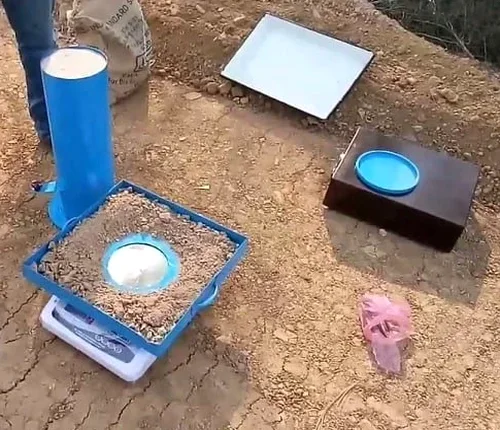
Methodology and scope

Corpus Christi’s climate splits the year into two compaction windows: the dry, windy fronts of winter and the sticky, subtropical humidity from May through October. You can’t run a sand cone the same way in both. When the surface moisture hits 18 percent on a fat clay pad off SPID, the Ottawa sand clumps in the cone and the test is trash before you even weigh it. We adjust by drying the calibration sand on-site and using larger test holes—up to six inches across—to get a representative volume in blocky, high-PI clays. The field density test (sand cone method) gives us a direct wet density number, and paired with a speedy moisture reading we report the dry density and percent compaction against the lab standard. On granular coastal berms, we often run a rapid check with the sand cone density method on every third lift to keep the earthwork crew moving without waiting on a nuke gauge warm-up. The data lands in a field report the same day—no lab turnaround, no delayed backfill.
Field Density Testing with Sand Cone in Corpus Christi — ASTM D1556 Compliance
Technical reference image — Corpus Christi

Local geotechnical context

The most vulnerable part of a sand cone test isn’t the math—it’s the sand. We carry sealed buckets of graded Ottawa sand onto every Corpus Christi job, and the first thing the technician checks is the calibration factor against the metal mold. Humidity, vibration during transit, even static electricity from a plastic funnel can change the bulk density of the sand by a few percent, which is enough to fail a good lift or pass a bad one. On sites near the ship channel where the native soil is dredged spoil with shell fragments, the test hole walls collapse easily; we use a template and a careful finger-trim technique to keep the volume true. If the hole loses shape, the test is void—period. We repeat it three feet away and document the refusal. There’s no fudging a sand cone reading. The scale doesn’t care about your schedule.

Need a geotechnical assessment?

Reply within 24h.

Email: contact@geotechnical-engineering1.org

Technical data

ParameterTypical value
Standard methodASTM D1556 / AASHTO T-191
Test depth rangeUp to 6 in. (150 mm) per lift; can be extended with stepped excavation
Calibration sandGraded Ottawa sand (C778 20–30), dried and stored on-site
Field volume apparatus12–20 Ottawa sand jar with cone and base plate, calibrated daily
Moisture correlationSpeedy moisture tester or hot-plate / microwave method for rapid dry density
Minimum test frequency1 test per 1,500–3,000 ft² per lift per spec; more frequent on critical fills
ReportingWet density, dry density, percent compaction vs. Proctor, plus location sketch

Related services

01

Sand Cone Field Density (ASTM D1556)

Direct measurement of in-place density on compacted fills using calibrated Ottawa sand. One test per lift, same-day report with percent compaction vs. lab Proctor.

02

Standard & Modified Proctor (ASTM D698 / D1557)

Laboratory moisture-density curves on representative bulk samples. We run both energies so you can match the spec exactly—standard Proctor for landscape fills, modified for structural pads and pavement subgrade.

03

Rapid Moisture Content (Speedy / Microwave)

Field moisture determination alongside every sand cone test. We report dry density within 15 minutes so the foreman knows whether to keep rolling or shut down and scarify.

04

Compaction Verification for Utility Trenches

Narrow-trench density checks per City of Corpus Christi utility standards. We use a small-hole sand cone adaptor in confined excavations where a full plate won’t seat.

Regulatory framework

ASTM D1556 / AASHTO T-191: Standard Test Method for Density of Soil In-Place by the Sand-Cone Method, ASTM D698 / AASHTO T-99: Standard Proctor for moisture-density reference curve, ASTM D1557 / AASHTO T-180: Modified Proctor for higher-energy compaction specifications, TxDOT Tex-115-E: Field Method for Determining In-Place Density of Soils and Base Materials

Questions and answers

How much does a field density test with sand cone cost in Corpus Christi?
When is a sand cone test required instead of a nuclear gauge?

The sand cone is the referee method when nuclear gauge readings are disputed, when you’re working in trenches too narrow for a gauge, or when the spec simply says “ASTM D1556” and nothing else. It’s also required on sites where a nuclear source is prohibited—some federal projects, school campuses, and port facilities around Corpus Christi have strict radiation-control policies.

How long does a sand cone field density test take?

From setup to a final dry-density number, allow about 20 to 30 minutes per test. The physical test—digging the hole, pouring the sand, weighing the excavated soil—takes about 10 minutes. The rest is moisture determination on-site and calculating percent compaction against the lab Proctor. We hand the foreman a signed field ticket before we leave the lift.

Location and service area

We serve projects across Corpus Christi and surrounding areas.

View larger map