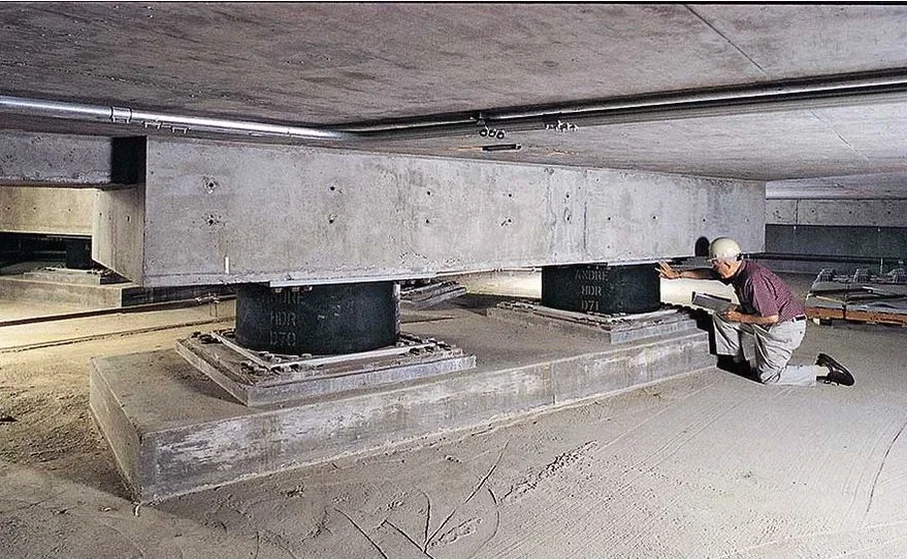
Seismic engineering in Corpus Christi addresses the critical need to design, assess, and retrofit structures and infrastructure to withstand earthquake-induced forces. While Texas is not traditionally associated with the high seismicity of the West Coast, Corpus Christi's proximity to the Gulf Coast and its unique geological setting introduce specific seismic hazards that demand rigorous analysis. This category encompasses a comprehensive suite of services, from evaluating ground behavior during an event to implementing advanced protective systems, ensuring the resilience of the built environment against both natural and induced seismic events.
The region's geological profile is dominated by thick sequences of unconsolidated Quaternary and Tertiary sediments, including coastal plain deposits, fluvial sands, and expansive clays. A defining characteristic of the local stratigraphy is a shallow groundwater table, often within a few meters of the surface. These conditions create a significant risk for soil liquefaction analysis, where otherwise solid ground can behave like a liquid during shaking, leading to a catastrophic loss of bearing capacity. The presence of soft clays can also amplify seismic waves, a phenomenon known as site amplification, which must be quantified to understand the true shaking intensity a structure will experience.
Governing design practice in the United States is primarily based on the International Building Code (IBC), which in Texas adopts ASCE 7, 'Minimum Design Loads and Associated Criteria for Buildings and Other Structures.' This standard mandates a site-specific seismic hazard analysis to determine the Maximum Considered Earthquake (MCE) ground motion parameters. For critical infrastructure and high-occupancy buildings, a more granular evaluation, such as a seismic microzonation study, is often required to map the spatial variability of ground motion response across a project site, accounting for the local soil column's dynamic properties. These studies directly inform the design spectrum used by structural engineers.
Projects that mandate these specialized seismic services range from high-value petrochemical facilities, LNG terminals, and port infrastructure along the Corpus Christi Ship Channel to major bridge crossings, hospitals, and tall buildings. For essential facilities where downtime is unacceptable, performance-based design approaches are employed, often utilizing advanced technologies like base isolation seismic design. This method decouples a structure from the ground motion, dramatically reducing the forces transmitted into the superstructure and protecting sensitive equipment and operations. Even for conventional structures, a thorough seismic site classification per ASCE 7 Chapter 20 is a non-negotiable first step in any geotechnical investigation.
While shaking intensity is a factor, the primary hazard is often ground failure, specifically soil liquefaction. The region's extensive loose, saturated sandy deposits and shallow groundwater mean that moderate shaking can cause the ground to lose strength, leading to foundation settlement, lateral spreading, and structural distress independent of the shaking itself.
Seismic design is governed by the International Building Code (IBC), which references ASCE 7. This standard requires a site-specific analysis to determine spectral acceleration parameters (Ss and S1) and the site class, which modifies these values based on the local soil profile's stiffness and depth.
A soil profile can significantly amplify or de-amplify bedrock ground motion. Soft clay sites common in Corpus Christi can amplify long-period shaking, affecting taller, more flexible structures. A site-specific response analysis is performed to quantify this modification and develop a design spectrum that accurately represents the surface-level seismic hazard.
Yes, while naturally occurring earthquakes are infrequent, induced seismicity from wastewater injection has been documented in Texas. For critical projects, a probabilistic seismic hazard analysis (PSHA) may need to integrate both natural and induced sources to establish a more robust and comprehensive design basis, as recommended by the USGS and ASCE 7.
We serve projects across Corpus Christi and surrounding areas.