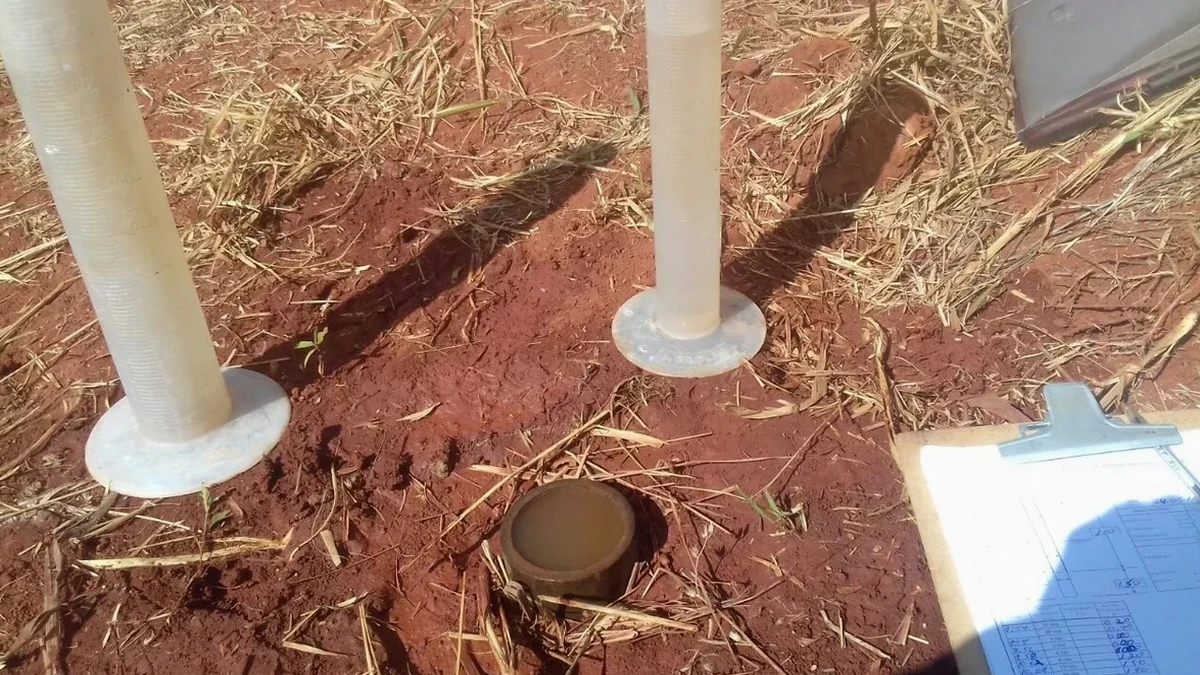
Corpus Christi sits at an average elevation of just 7 feet above sea level, where the boundary between the Nueces River floodplain and the clay-sand interfaces of the Beaumont Formation defines every underground project. With a metropolitan population surpassing 420,000 and major port expansions underway, the demand for precise geotechnical characterization has never been higher. The Lefranc and Lugeon in-situ permeability tests provide direct measurements of hydraulic conductivity that laboratory remolding simply cannot replicate, especially in the stratified Pleistocene deposits found beneath the Coastal Bend. The CPT test often serves as a preliminary screening tool to identify the precise horizons where a permeability test becomes essential, allowing the engineering team to target specific sandy lenses or fractured clay zones that control groundwater flow toward excavations.
A single Lugeon test in fractured Beaumont clay can reveal flow regimes that completely change the dewatering strategy for a deep excavation, saving weeks of downtime on the Gulf Coast.
Frequently asked questions
How much does a Lefranc or Lugeon permeability test cost in Corpus Christi?
Field permeability testing in the Corpus Christi area typically ranges from US$600 to US$1,160 per test interval, depending on borehole depth, access conditions, and whether the test is performed during an existing drilling program or as a standalone mobilization. Projects near the ship channel or on barrier islands may involve additional logistics for rig access and tide coordination.
When is a Lugeon test required instead of a Lefranc test?
A Lugeon test is specified when the formation behaves more like rock than soil — stiff to hard Beaumont clay with fractures, the caliche horizons common in the Corpus Christi area, or the Wilcox sandstone encountered in deeper borings. The packer system isolates a specific interval and injects water under pressure, measuring how the formation responds across multiple pressure stages. The Lefranc method applies to granular soils and soft clays where a simple constant-head or falling-head test in an open borehole provides reliable hydraulic conductivity.
How long does each permeability test take in the field?
A single Lefranc test typically requires 45 to 90 minutes including stabilization time, while a complete 5-stage Lugeon test spans 60 to 120 minutes depending on formation permeability. Low-permeability clays common in Corpus Christi may need longer pressure-step durations to reach steady-state flow. The test interval setup — drilling to depth, cleaning the borehole, installing the packer — adds additional rig time that the field team coordinates with the overall site investigation schedule.
What factors affect the accuracy of in-situ permeability measurements in the Coastal Bend region?
Several local factors influence measurement quality: the presence of gas in shallow sediments near the Nueces River basin can cause erratic flow readings; tidal fluctuations in the shallow aquifer affect baseline water levels during testing near the bayfront and the Inner Harbor; and the heterogeneous nature of the Beaumont Formation, where sand stringers and silt partings create vertical anisotropy, demands careful selection of test intervals. The field team mitigates these effects by using downhole pressure transducers and running calibration checks before each test sequence.